Golf Cart Won’t Charge: Diagnostic Sequence from Most to Least Common
A golf cart won’t charge for one of six reasons: the pack voltage is too low for the charger to recognize, the OBC (onboard computer) has shut off the charge circuit, the charger plug or receptacle has a bad connection, a battery in the pack has failed, there is a wiring fault between the receptacle and the pack, or the charger itself has failed. That order is also the order to check them. The most common cause is pack voltage below the charger’s turn-on threshold, often caused by an OBC that cut the charging circuit. It is the one most owners skip. This guide works through each cause in sequence with the specific test for each one.
Last verified: Club Car DS 48V (PowerDrive 3 charger, OBC reset procedure) and EZGO TXT 48V (DPI charger) | June 2026 | Fluke 117 multimeter used for all voltage readings
Key Takeaways
- Most automatic golf cart chargers will not turn on if the pack voltage is below a minimum threshold. On a 48V system this is typically 25 to 30 volts. A pack that has self-discharged too far, or that has one dead cell dragging the string down, will not trigger the charger. Before replacing anything, measure total pack voltage at the charge receptacle with a multimeter. If it is below 25V on a 48V system or below 20V on a 36V system, the charger needs to be manually jumpstarted or the pack needs a slow charge from a manual charger first.
- On Club Car DS carts with a PowerDrive charger, the OBC (onboard computer) is the most common reason a charger stops working or never turns on. The OBC monitors pack voltage and disconnects the charge circuit when the pack drops too low. An OBC that has tripped in an unrecoverable state prevents the charger from engaging even with a good pack. The fix is a specific reset procedure, not a new charger. Replacing the charger without resetting or bypassing the OBC will produce the same result with the new charger.
- Charger plug and receptacle corrosion accounts for more no-charge calls than most owners expect. The Powerwise and Round plug connectors on EZGO and Club Car carts have copper pins that corrode and lose contact. A charger that clicks once and goes silent, or that shows full charge immediately when the pack is clearly depleted, often has a bad pin connection, not a bad charger or battery. Clean the plug pins and receptacle contacts before condemning the charger.
Symptom Triage: Which Problem Do You Have?
The three failure patterns look different and point to different causes. Identify which one matches your cart before starting any diagnostic work.

| Symptom | Most Likely Cause | Start Here |
|---|---|---|
| Charger does not turn on at all (no fan, no light, no noise) | Pack voltage below threshold, OBC fault, or bad plug connection | Step 1: Check pack voltage |
| Charger turns on, runs briefly, then shuts off | Bad battery cell in the pack, OBC cutting off early, or charger thermal shutdown | Step 4: Test individual batteries |
| Charger runs to completion but cart still shows low charge | One or more failed batteries not accepting charge | Step 4: Test individual batteries |
| Charger shows full charge immediately (under 5 minutes) | Bad plug pin connection (charger not actually connected to the pack) | Step 3: Check plug and receptacle |
| Cart charges fine but runs out quickly | Weak battery in the pack, not a charging fault | Step 4: Test individual batteries |
Step 1: Check Pack Voltage at the Receptacle
This is the first test regardless of symptom. Set a multimeter to DC voltage (20V range for a 36V system, 200V range for a 48V system). Probe the two main terminals inside the charge receptacle, positive and negative. On most carts the receptacle is mounted on the body near the rear passenger footwell or under the seat.
Expected readings and what they mean:
- 36V system, normal: 36 to 42 volts. Charger should engage.
- 36V system, below threshold: Under 20 volts. Charger will not engage automatically. The pack has one or more failed cells or has been deeply discharged.
- 48V system, normal: 48 to 56 volts. Charger should engage.
- 48V system, below threshold: Under 25 volts. Same situation: charger will not engage automatically.
- 0 volts at the receptacle: The pack is not connected to the receptacle, or there is a broken wire or open circuit between the pack and the plug. This is a wiring fault, not a battery fault. Skip to Step 5.
If pack voltage is below the charger’s turn-on threshold, connect a manual battery charger (one that will force charge regardless of voltage) to the individual 6V or 8V batteries in series and bring each battery up to at least 5V (for 6V) or 7V (for 8V) before attempting to use the automatic charger again. Alternatively, use the manual charger’s 12V mode across each battery individually. Charge each battery for no more than 10 minutes at a time, then check whether the automatic charger has turned on. Once total pack voltage is above the threshold, the automatic charger should engage normally. Do not continue manual charging once the automatic charger starts. Let the automatic charger complete the cycle.
If pack voltage reads normal but the charger still will not engage, move to Step 2.
Step 2: Check and Reset the OBC
The OBC (onboard computer) is a small module that manages the charge circuit on Club Car DS carts (1995 and newer with a PowerDrive charger) and EZGO TXT carts. It monitors pack voltage, controls the charge relay, and shuts down the charge circuit if the pack drops below a safe threshold. An OBC that has tripped may prevent charging even after the pack is brought back up to normal voltage.
Club Car DS OBC Reset Procedure
The Club Car DS PowerDrive OBC reset is performed through the charge receptacle using a specific voltage sequence. You need a 36V or 48V power supply or a charged battery pack of the correct voltage connected to the receptacle with the polarity matching the pack.
The field reset method that works on most Club Car DS OBCs: connect the charger plug to the receptacle. If the charger fan does not start, disconnect and reconnect the main battery pack negative cable (the one going to the negative terminal of the first battery in the series string). Wait 30 seconds, then reconnect it. This forces the OBC to re-initialize. Attempt the charger again. If this does not work, the OBC may need replacement. Club Car part number 101822801 is the OBC for most 48V DS models from 1995 to 2013. Verify the part number against your serial number before ordering.
A quicker field test: bypass the OBC entirely by connecting the charger directly to the battery pack terminals (positive to pack positive, negative to pack negative) using jumper cables, bypassing the receptacle and OBC circuit entirely. Use this as a diagnostic test only, not as a long-term workaround. Never leave a charger connected in bypass mode unattended. Bypassing the OBC removes the safety cutoff that prevents overcharging. If the charger starts and runs normally with this direct connection, the OBC or the receptacle wiring is the fault, not the charger or the batteries.
EZGO TXT Charge Circuit
EZGO TXT carts use a different charge control system. The DPI (PowerWise QE) charger communicates with the cart through the charge receptacle’s signal pin. If the signal pin is corroded or the charger and cart’s communication protocol do not match (a common issue with aftermarket chargers on EZGO), the charger will not engage. There is no OBC reset procedure equivalent to the Club Car method. Instead, verify that the charger is the correct model for the cart’s year and voltage, and check the signal pin in the receptacle for corrosion or damage.
On older EZGO models (pre-2000), the charge system does not use a signal pin. If the charger does not engage on an older TXT, go directly to checking the D/F terminals on the charger (covered in Step 3).
Step 3: Inspect the Charger Plug and Receptacle
The charge plug and receptacle are mechanical wear items. The pins are copper and corrode over time, especially on carts stored outdoors or in humid climates. A corroded pin that looks visually intact can have enough oxidation to add significant resistance to the circuit, preventing the charger from detecting the pack correctly.
Remove the charger plug from the receptacle and inspect the pins under good light. Corroded pins will show green or brown discoloration. Use 400-grit sandpaper or an emery board to clean the pin surfaces. Clean the matching contacts inside the receptacle with a small brush and electrical contact cleaner. Do not use Vaseline or WD-40 on the contacts. Use a dedicated dielectric grease after cleaning to protect against future oxidation.
On Club Car DS carts, the PowerDrive receptacle has three pins: two large power pins and one small signal pin. All three must make clean contact. The signal pin is smaller and corrodes faster than the power pins. If the signal pin is damaged or missing, the OBC will not see the charger and will not enable the charge circuit.
On EZGO TXT carts with a Powerwise charger, the round receptacle has a center pin and an outer ring. The center pin is the positive and the outer ring is the negative. Corrosion on the outer ring is common because it is the larger surface area exposed to moisture. If the charger clicks once and immediately goes silent, clean both surfaces and retest before any further diagnosis.
D/F Terminal Check on Older Chargers
Older Lester, PowerDrive, and Schauer chargers have a D/F (Delayed/Forward) terminal pair on the charger housing, usually two small terminals near the cord entry point. These terminals complete a circuit through the charger plug that tells the charger a cart is connected. If the D/F circuit is open, either because the plug pins are not making contact or because the wire inside the plug has broken, the charger will not start.
To test: unplug the charger from the cart, set the multimeter to resistance (ohms), and probe the D/F terminals on the charger plug. A good plug reads 0 to 5 ohms through the D/F pins. An open circuit (infinite resistance) means the D/F wire inside the plug has broken or the pins are not contacting. Replacing the plug is a $15 to $30 fix and solves this problem completely.
Step 4: Test the Battery Pack
If pack voltage is present, the OBC resets correctly, and the plug connection is clean, the next step is testing the individual batteries. A single weak or dead cell in a series pack can cause the symptoms listed in the triage table: the charger starts and then stops early, or completes a charge cycle but the cart runs out of power quickly.
Voltage Test Under Load
Measure each battery individually with the multimeter. A 6V flooded lead-acid battery should read 6.2 to 6.4V at rest (not immediately after charging). A reading below 5.5V at rest indicates a failed or deeply sulfated battery. An 8V battery should read 8.2 to 8.5V at rest. A 12V battery should read 12.5 to 12.7V.
Resting voltage alone is not enough. A battery that reads 6.3V at rest can collapse to 4V under load. The most reliable test is a load test: apply a load (either by driving the cart briefly or using a dedicated battery load tester) and measure the voltage while the load is applied. A battery that drops more than 1V under a moderate load is failing and will drag the rest of the pack down. One weak battery in a six-battery 36V pack or a six-battery 48V pack will limit the capacity of every battery in the string.
Specific Gravity Check on Flooded Lead-Acid Batteries
For flooded lead-acid batteries, a hydrometer specific gravity test is more diagnostic than voltage alone. A fully charged 6V or 8V flooded cell should show 1.265 to 1.280 specific gravity in each cell. A cell reading below 1.225 is discharged. A cell that reads below 1.150 regardless of how long it has been on charge is sulfated and will not recover. If one cell in a six-cell 6V battery reads 1.100 while the others read 1.260, that one cell is dead and the battery needs replacement.
Never mix battery brands or add a single replacement battery to an existing pack. A new battery in a pack with older batteries will be pulled down to the level of the weakest battery in the string within a few charge cycles. If one battery has failed, replace the entire pack. See the guide on golf cart battery maintenance for water level, equalization, and watering interval guidance specific to flooded lead-acid packs.
Step 5: Check Pack Wiring and Connections
If all batteries test good individually but the charger still will not engage, or if Step 1 showed 0 volts at the receptacle, there is a wiring fault between the pack and the charge receptacle.
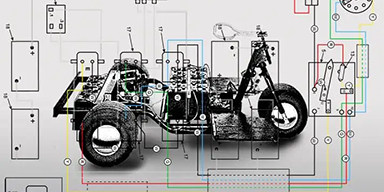
Start at the battery pack and trace the charge circuit to the receptacle. On a Club Car DS, the charge circuit runs from the positive terminal of the last battery in the string, through the OBC, to the positive pin of the receptacle. The negative side runs from the negative of the first battery directly to the negative pin. Disconnect the main negative pack cable (the one that goes to the cart’s frame ground or to the negative side of the controller) before touching any other wiring in the pack.
Check each ring terminal on every battery connection for corrosion or looseness. A ring terminal that turns freely on the battery post (one that can be rotated by hand) is not making full contact and is adding resistance to the circuit. Clean corroded terminals with a battery terminal cleaner brush and baking soda solution, rinse with water, dry, and reconnect with the correct torque. Battery post bolt torque on most Club Car and EZGO platforms is 80 to 100 inch-pounds. Hand-tight is not enough.
On EZGO TXT carts, also check the fuse or circuit breaker in the charge circuit. The TXT uses a 15A or 20A fuse inline between the battery pack and the charge receptacle on some models. A blown fuse will show 0 volts at the receptacle while the pack reads normal voltage at the battery terminals. The fuse is typically located under the seat near the battery pack, clipped to the wiring harness.
Step 6: Test the Charger Itself
If all five previous steps check out and the cart still will not charge, the charger is the remaining suspect. The simplest test is swapping in a known-good charger of the correct voltage and connector type. If a borrowed charger engages and charges the pack normally, the original charger has failed.
Before condemning the charger, check the AC input side. Plug the charger into a different outlet. Test the outlet with another appliance. Charger faults caused by no AC power are common and embarrassing to diagnose after replacing the charger. Also check the charger’s AC cord for damage at the stress point near the body of the charger, which is where the cord is most likely to develop an internal break from repeated coiling.
On Lester and PowerDrive automatic chargers, a failed internal relay is a common fault mode. The charger fan will run and the indicator light may illuminate, but the output relay does not close and no DC current flows to the pack. Testing requires a DC clamp meter on the output leads or a voltage measurement at the charger output terminals while the charger is plugged into AC. If the fan runs but output voltage reads 0V DC, the output relay or the charge control board has failed. Repair is possible but a replacement charger is often more cost-effective given the age of most carts.
Replacement Charger Options
These are the three charger options currently listed on GolfCartTips. Verify the voltage and connector type for your specific cart before ordering. A 48V charger on a 36V pack will damage the batteries.
- Lester Link Series 48V (Club Car 1995–2013): Lester Link Series 48 Volt Golf Cart Battery Charger: OEM-equivalent for Club Car DS with PowerDrive receptacle.
- 36V for EZGO (trickle/maintenance): 36 Volt Golf Cart Battery Charger for EZGO: trickle-capable, round plug, fits most EZGO 36V models.
- 48V Club Car DS/Precedent: 48 Volt 15 Amp Golf Cart Battery Charger for Club Car DS and Precedent: aftermarket 48V unit with PowerDrive-style connector.
For testing the charger and individual batteries, a reliable multimeter is the only tool that covers every step in this diagnostic sequence. The voltmeter linked from the original article (see the battery testing guide) works for basic voltage checks. For load testing individual batteries, a dedicated golf cart battery testing procedure is covered separately.
Frequently Asked Questions
Why won’t my golf cart charger turn on?
The most common reasons are: pack voltage is below the charger’s turn-on threshold (measure at the receptacle with a multimeter), the OBC has tripped and is blocking the charge circuit (Club Car DS with PowerDrive charger), or the charge plug pins are corroded and not making proper contact. Check these three things in that order before replacing the charger or the batteries.
How do I reset the OBC on a Club Car golf cart?
Disconnect the main pack negative cable from the first battery in the string. Wait 30 seconds, then reconnect it. This forces the OBC to re-initialize. Plug in the charger and see if it engages. If it does not, test pack voltage at the receptacle to confirm the OBC is receiving sufficient voltage to enable the charge circuit. If pack voltage is normal and the OBC still will not enable charging after a reset, the OBC module needs replacement.
What voltage should my golf cart battery pack read?
A 36V pack at rest should read 36 to 42V. A 48V pack at rest should read 48 to 56V. Below 25V on a 48V pack or below 20V on a 36V pack, most automatic chargers will not engage. If your pack reads lower than these minimums, use a manual charger to bring each battery up individually before attempting the automatic charger again.
Can a bad battery prevent the charger from working?
Yes. A single dead cell in the battery string will pull total pack voltage below the charger’s turn-on threshold. The charger sees insufficient voltage and does not start, even though most of the batteries in the pack are fine. This is one of the most common causes of a charger that suddenly stops working on an otherwise healthy-seeming cart. Test individual battery voltages to identify the failed cell.
My golf cart charger starts but stops after a few minutes. What is wrong?
Three likely causes: a battery in the pack has a shorted cell that is causing the charger’s current limit to trip, the OBC is cutting off the charge circuit due to a voltage reading it interprets as abnormal, or the charger itself is overheating and entering thermal shutdown. Test the individual batteries first. A shorted cell will show low voltage and will not accept charge. If all batteries test normal, check that the charger’s ventilation slots are not blocked and that it is in an area with adequate airflow.
Should I replace the whole battery pack or just one battery?
Replace the whole pack. A new battery introduced into a string with older batteries will be discharged down to the level of the weakest cell in the pack on every cycle. Within a few weeks, the new battery performs no better than the old ones. The only exception is if the pack is relatively new (under a year old) and one battery has failed due to physical damage rather than age-related capacity loss. Even then, matching the replacement battery’s brand, model, and manufacture date to the rest of the pack is critical.
References
Club Car DS Service Manual (2012 edition): OBC operation, charge circuit wiring diagram, PowerDrive receptacle pin assignment. Club Car LLC, Augusta, GA.
EZGO TXT Service Manual (2019 edition): charge circuit, Powerwise QE charger interface, fuse location and rating. Textron Specialized Vehicles, Augusta, GA.
Lester Electrical Service Documentation: Link Series charger troubleshooting guide, D/F terminal test procedure, output relay fault diagnosis.
Trojan Battery: Battery Care and Maintenance Guide: specific gravity targets, sulfation identification, equalization procedure for flooded lead-acid golf cart batteries.
About the Author
Chuck Wilson spent decades as a golf cart and small vehicle mechanic before retiring. His shop work covered Club Car, EZGO, and Yamaha platforms across gas and electric drivetrains. He runs GolfCartTips.com in retirement, writing about repairs and maintenance based on jobs he has actually done, not manufacturer talking points. If a procedure is on this site, it has been performed on a real cart.
Last verified on: Club Car DS 48V with PowerDrive 3 charger and EZGO TXT 48V with DPI charger, June 2026. OBC reset procedure confirmed on Club Car DS serial range AM9901-212345. Fluke 117 multimeter used for all voltage and resistance measurements.