Golf Cart Battery Meter: 5 Proven Steps to Install It Right
A golf cart battery meter tells you how much charge is left in the pack before the cart quits on you mid-round. Installing one takes about 30 minutes if you have the right meter for your voltage and understand where the wires go. Get either of those wrong and the meter reads inaccurate, drains your pack, or stops working the first time you disconnect the battery. This guide covers meter selection, wiring for 36V and 48V systems, mounting, and the three installation mistakes that cause most of the problems.
Last verified: EZGO TXT 48V electric | May 2026 | Drok 8-100V digital voltmeter, 18 AWG primary wire, key switch tap at ACC terminal
Key Takeaways
- The most common mistake is buying a meter that does not match the pack voltage. A 36V meter on a 48V system reads wrong from the first charge cycle. Verify the meter’s rated input voltage before ordering, and confirm your actual pack voltage with a multimeter before you touch the wiring.
- Wiring to the key switch instead of directly to the battery is not optional on most carts. A meter wired directly to the pack draws a small continuous current. Over weeks of sitting, that drains the batteries. Tap the meter’s positive lead to the accessory side of the key switch so it only powers on when the cart is running.
- Standard lead-acid battery meters do not work accurately with lithium packs. Lead-acid meters read voltage against a discharge curve calibrated for flooded or AGM cells. Lithium packs hold voltage flat until nearly empty. If your cart has a lithium conversion, buy a meter specifically rated for lithium chemistry or one with an adjustable voltage range.
How to Choose the Right Golf Cart Battery Meter
Before you buy anything, confirm two things: your pack voltage and your battery chemistry. Check the batteries themselves. The voltage is printed on the label of each cell. Add them up in series to get your pack voltage. Six 8-volt batteries wired in series is a 48V pack. Six 6-volt batteries is a 36V pack. Four 12-volt batteries is also a 48V pack. The meter must match that total voltage.
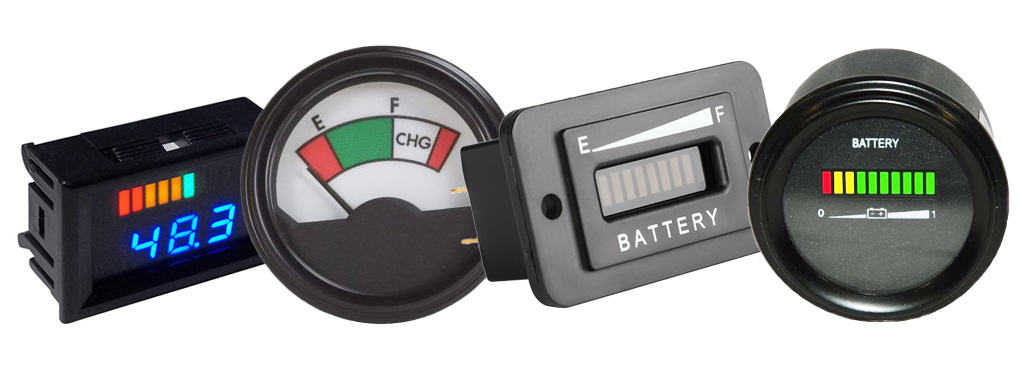
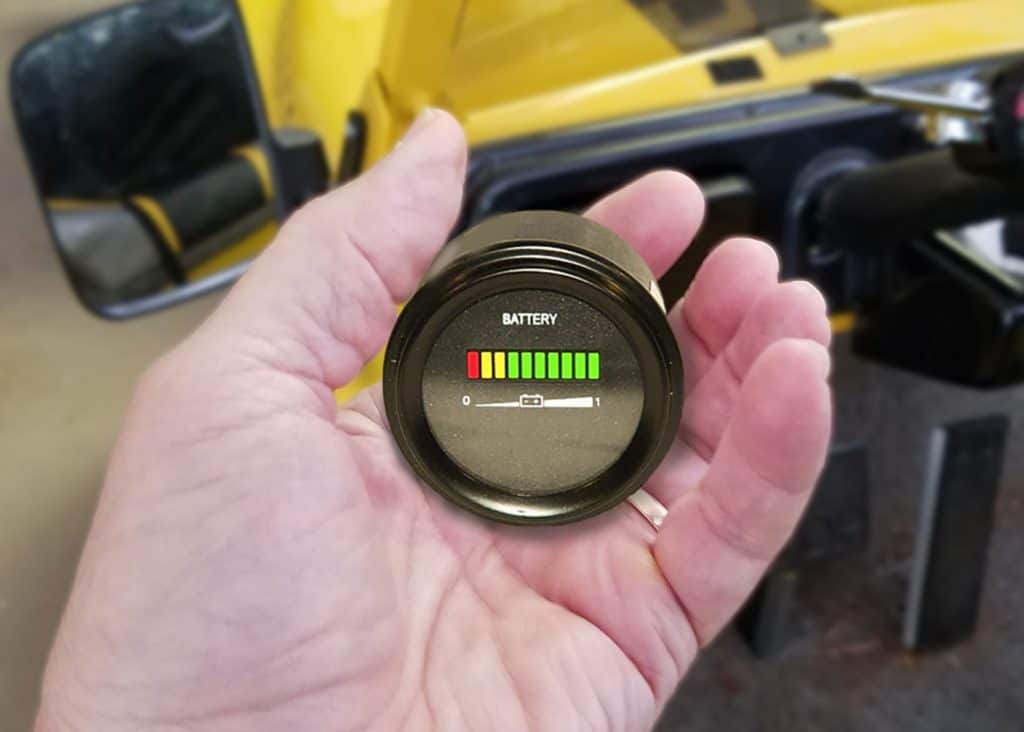
Meter types break down into two categories. Digital voltmeter displays show exact voltage as a number, which is the most useful for actually understanding pack state. Bar graph or LED segment meters show charge level as a percentage or series of lights. They are easier to read at a glance but give you less information. For most owners, a simple digital voltmeter in the $10-20 range is the right choice. The displays are bright enough to read in daylight and accurate to within 0.1 volts.
If your cart runs a lithium pack, the meter must be rated for lithium chemistry or have an adjustable low-voltage cutoff. A standard lead-acid meter reads a lithium pack as nearly full even when it is 80% depleted, because lithium holds a higher resting voltage through most of its discharge range. That is worse than no meter at all. Lithium-compatible meters are available in the same price range as lead-acid meters. Check the specs before buying.
Where to Mount a Golf Cart Battery Meter
The dashboard directly in the driver’s line of sight is the right location. You want to see the meter without looking away from the path. Most golf cart dashboards are thin ABS plastic and drill easily. Measure the meter’s bezel diameter before drilling. Most mini digital voltmeters use a 22mm or 1-inch hole. Drill slightly undersized and file to fit rather than going oversized on the first pass.
If you are not comfortable drilling the dashboard, a small project box or accessory panel mounted under the dash works as well. Adhesive mounting is not reliable long-term on a cart that sees vibration. The meter will work loose. Use a mechanical mount with a bezel nut or a bracket.
Route the wires before you commit to a mounting location. The positive lead needs to reach the key switch, which on most carts is within 18-24 inches of the dashboard. The negative lead runs to chassis ground or the pack negative. Plan the wire path so it does not cross moving parts or rest against anything that gets hot.
How to Wire a Golf Cart Battery Meter
Disconnect the main pack negative before touching any wiring. On a 48V system that is not a suggestion. Even with the key off, the pack is live between the batteries and the controller.
Tools needed: Wire strippers, crimping tool, multimeter, 18 AWG primary wire (red and black), butt splice connectors or ring terminals, adhesive-lined heat shrink.
Parts and Tools for This Job
- DROK Waterproof Battery Monitor 8-100V, 36V/48V Compatible — LCD display, works on both lead-acid and lithium packs, voltage calibration adjustment on the back, surface-mount bracket included. Rated for golf cart, marine, and RV use.
- 36V/48V/72V Golf Cart Battery Meter with Key Switch Input — golf cart-specific unit with front-panel button for battery type selection. Handles both acid and lithium chemistry. Pre-configured for cart voltage ranges.
- 10L0L Waterproof LED Digital Voltmeter, Club Car/EZGO/Yamaha Compatible — 5-120V rated, waterproof housing, panel-mount design. Confirmed compatible with Club Car DS, EZGO TXT, and Yamaha Drive.
- Adhesive-Lined Heat Shrink Butt Splice Connectors, 16-14 AWG — marine grade, dual-wall adhesive liner. Use these for the key switch tap. The adhesive seal prevents the vibration failures that cause intermittent meter readings.
- iCrimp Crimping Tool, 8-1/0 AWG — handles both meter wiring and cable replacement in the same tool. Ratchet mechanism ensures full crimp engagement on every splice.
- Fluke 117 True-RMS Digital Multimeter — needed to identify the ACC terminal on the key switch and verify meter accuracy after install. The DC millivolt mode is also what you use for the cable drop test described in our golf cart battery cables guide.
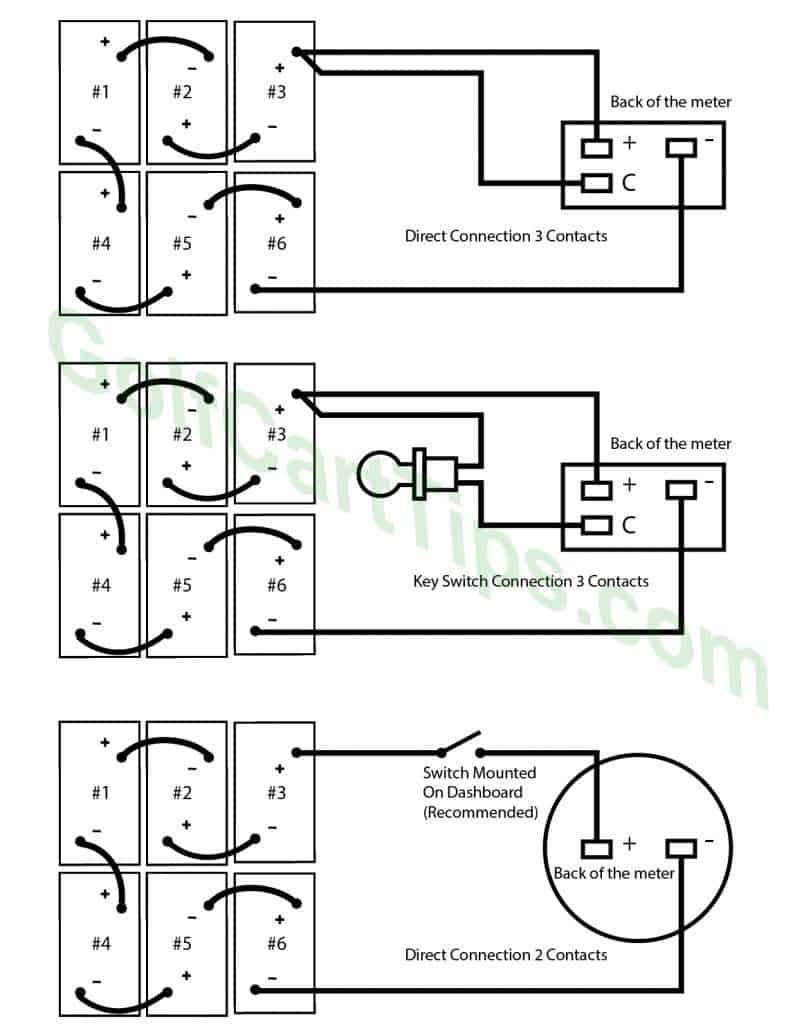
Most digital voltmeters have two or three wires. A two-wire meter uses the positive lead for both power and sensing. A three-wire meter has a separate sense wire. Follow the meter’s wiring diagram exactly. The following covers the standard two-wire installation.
Positive Wire: Key Switch Tap
Run the meter’s positive wire to the accessory terminal on the key switch. On most Club Car DS models, the key switch has four terminals: battery positive in, accessory out, ignition out, and a starter terminal. You want the accessory out terminal, which is live only when the key is in the run position. On EZGO TXT carts, the key switch is a simple two-position switch. The output terminal feeds the main contactor circuit. Tap the meter positive lead here with a butt splice on the existing wire rather than at the switch terminal itself, which can be tight on older carts. On Yamaha Drive carts, the key switch accessory terminal is marked with a yellow wire in most year ranges. Confirm with your service manual before splicing.
If you cannot identify the accessory terminal confidently, use a multimeter to check. Set it to DC volts, probe the terminal in question with the key off and then on. The accessory terminal reads zero volts with the key off and pack voltage with the key on. That is the right wire.
Expected result: Meter powers on when the key is turned to run and shuts off when the key is removed. No power draw with the key out.
Negative Wire: Chassis Ground or Pack Negative
Run the meter’s negative wire to a known good chassis ground point or directly to the pack negative terminal. A chassis ground is faster to reach, but confirm it is actually grounded to the pack negative with a multimeter. Some older carts have corroded ground straps that read as a ground but have enough resistance to cause meter inaccuracy. If the meter reads 2-3 volts low, a bad ground is usually the cause. Move the negative lead to the pack negative terminal directly and recheck.
Expected result: Meter displays within 0.5 volts of a direct multimeter reading across the full pack terminals. A fully charged 48V pack reads 50-52V on a lead-acid system. A fully charged 36V pack reads 38-39V. If the meter reads significantly lower than your multimeter, recheck the ground connection first.
3 Installation Mistakes That Kill Accuracy
These are the three problems that account for most meter failures and callbacks after a battery meter install.
Wrong Voltage Rating
A meter rated for 36V installed on a 48V pack reads the excess voltage as full charge permanently. The display sits at maximum and never moves regardless of actual pack state. The meter is not broken — it is simply out of range. Check the input voltage spec on the meter packaging. It must equal or exceed your pack voltage. Many inexpensive digital voltmeters are rated 8-100V and work on both 36V and 48V systems without issue. Buy one of those rather than a cart-specific meter if you are unsure.
Direct Battery Connection Without Key Switch
A meter wired directly to the pack positive draws between 5 and 20 milliamps continuously, depending on the display type. That sounds trivial. Over 30 days of sitting, a 20mA draw pulls roughly 14 amp-hours from the pack. On a 48V pack with 150Ah capacity, that is about 10% of charge lost to the meter. On a cart that sits in a garage for weeks at a time, this adds up fast and shortens battery life. Wire to the key switch. The extra 10 minutes is worth it. If you already have the cart tested for battery condition, the last thing you want is a parasitic drain undoing that work.
Poor Crimp on the Positive Tap
The most common wiring failure is a loose butt splice on the key switch tap. The connection passes a tug test when it is fresh but vibrates loose over a season of use. The symptom is a meter that works intermittently or flickers when the cart hits a bump. Pull back the heat shrink on any butt splice that shows this behavior and inspect the crimp. The barrel should be fully collapsed around both wires. If either wire pulls out with light force, redo the crimp. Use adhesive-lined heat shrink, not electrical tape, to seal the splice.
If you have recently gone through your golf cart battery cables and terminals, apply the same crimp quality standard to the meter wiring. A meter tap is a smaller gauge wire but the same failure mode applies.
Frequently Asked Questions
What voltage meter do I need for a 48V golf cart?
Any meter rated for an input voltage at or above 48V. Many digital voltmeters are rated 8-100V and work on both 36V and 48V systems. Avoid meters marketed specifically for 36V if your cart is 48V. The meter’s rated input must cover your actual pack voltage or the reading will be wrong.
Can I wire the battery meter directly to the battery instead of the key switch?
You can, but it causes a slow continuous drain on the pack. A meter drawing 10-20mA directly from the pack will pull several amp-hours per month. On a cart that sits unused for extended periods, this shortens battery life measurably. Wire to the key switch accessory terminal. It takes a few extra minutes and eliminates the parasitic drain entirely.
Will a standard battery meter work on a lithium golf cart?
No, not accurately. Standard meters are calibrated against a lead-acid discharge curve. Lithium packs hold voltage flat through most of their discharge range and then drop sharply near the end. A lead-acid meter reads a lithium pack as nearly full until the pack is almost depleted. Buy a meter specified for lithium chemistry, or a wide-range digital voltmeter and learn the actual resting voltages for your specific lithium pack at various states of charge.
My battery meter reads lower than my multimeter. What is wrong?
Almost always a bad ground connection. Move the meter’s negative wire directly to the pack negative terminal and recheck. If the readings align after that, the original ground point had enough resistance to cause the discrepancy. A corroded chassis ground strap is the most common culprit on carts over five years old.
How do I know when my golf cart is fully charged using the meter?
A fully charged 48V flooded lead-acid pack reads 50-52V at rest, measured at least one hour after the charger shuts off. A fully charged 36V pack reads 38-39V at rest. Do not read the voltage immediately off the charger. Surface charge inflates the reading by 1-2V and gives a false high. Let the pack rest before using the meter reading as a reference. If you want to go deeper on battery condition beyond voltage, testing golf cart batteries with a hydrometer or load tester gives you a more complete picture than voltage alone.
How do I maintain a golf cart battery meter?
Clean the display lens with a damp cloth when it gets dirty. Inspect the wiring connections at the key switch tap and ground point once per season. Look for corrosion at the crimp junctions, which shows as green or white powder on the wire. If the meter starts reading erratically, check the ground connection first, then the positive tap. Most meter failures trace back to one of those two points rather than the meter itself.
References
- Club Car DS Service Manual (current edition). Club Car LLC. Key switch terminal identification, accessory circuit wiring.
- EZGO TXT Service Manual (current edition). Textron Golf. Key switch wiring diagram, main contactor circuit.
- Yamaha Drive2 Service Manual (current edition). Yamaha Motor Corporation. Key switch wire color codes by year.
- Drok Digital Voltmeter product specifications. droking.com. Input voltage range, current draw spec.
About the Author
Chuck Wilson spent decades as a golf cart and small vehicle mechanic before retiring. His shop work covered Club Car, EZGO, and Yamaha platforms across gas and electric drivetrains. He runs GolfCartTips.com in retirement, writing about repairs and maintenance based on jobs he has actually done, not manufacturer talking points. If a procedure is on this site, it has been performed on a real cart.
Last verified on: EZGO TXT 48V electric. Meter used: Drok 8-100V digital voltmeter. Key switch tap: ACC terminal, 18 AWG red primary wire, butt splice with adhesive heat shrink.