Golf Cart Engines: Types, Maintenance & Upgrades
Gas or electric, stock or swapped — your golf cart engine is what everything else depends on. This covers how the two main types work, what breaks, how to keep them running, and what your upgrade options actually look like for E-Z-GO, Club Car, and Yamaha carts.
Last verified: May 2026 | Covers gas and electric golf cart engines | E-Z-GO, Club Car, Yamaha
Key Takeaways
- Most people shopping for a “more powerful” cart are actually solving a different problem — low battery voltage, a worn controller, or a slipping belt. Before you spend money on an engine swap, rule those out first. A fresh set of batteries or a $150 controller can feel like a completely different cart.
- Gas and electric engines are not interchangeable. Swapping types means replacing the fuel system or battery pack, the drivetrain coupling, throttle controls, and often the frame mounts. It’s doable, but it’s a project, not an afternoon.
- Engine lifespan numbers (3,000 to 5,000 hours) assume regular maintenance. A neglected gas engine can be toast at 500 hours. A well-maintained one can push past 5,000. The hours matter less than what was done during them.
Gas vs. Electric: How They Actually Differ
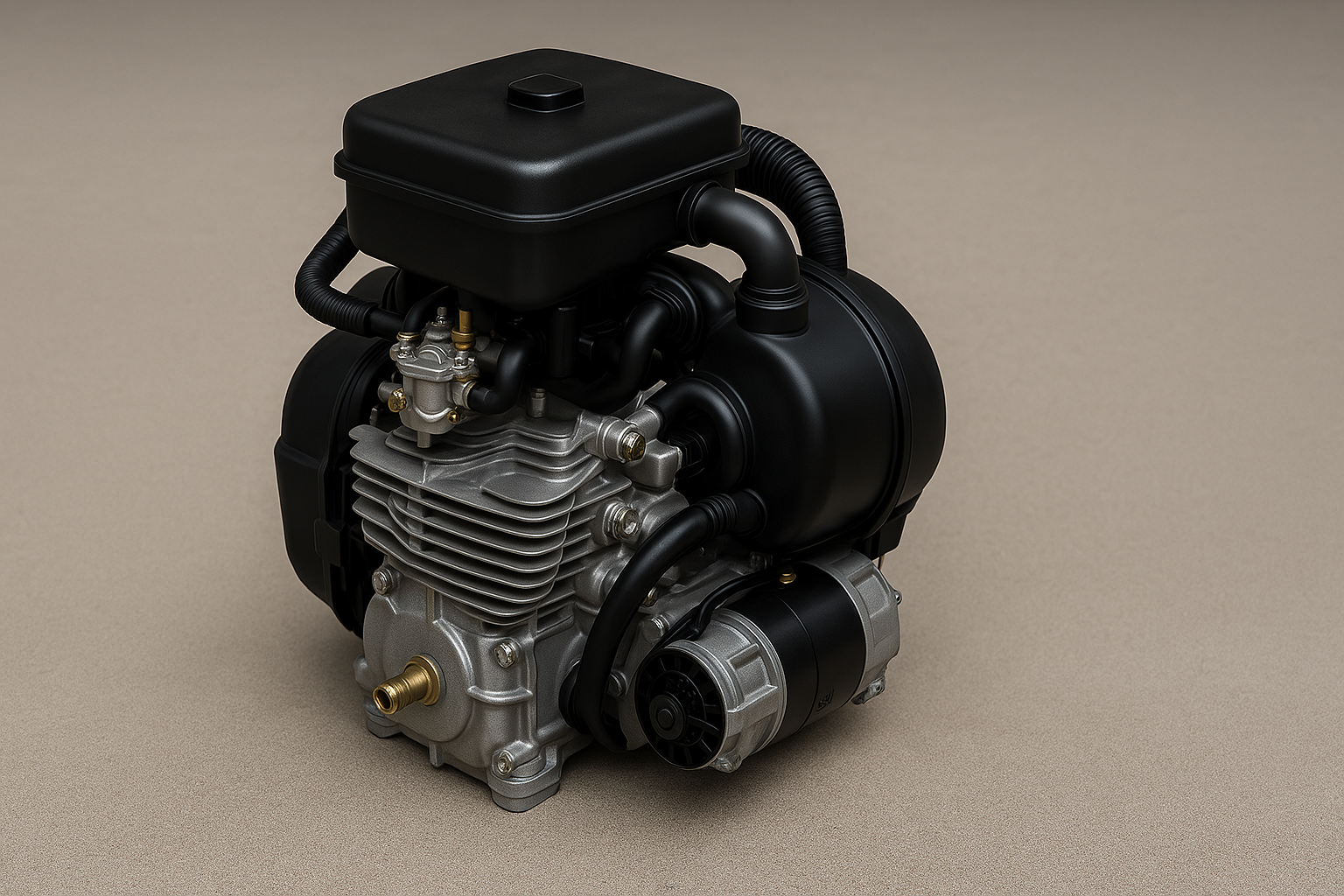
Gas golf cart engines are small single-cylinder four-strokes — the same basic design as a riding mower engine, just tuned for the torque curve you need at low speeds. Most stock gas carts run between 10 and 13 horsepower. E-Z-GO TXT models use a 295cc or 350cc Robin/Subaru engine. Club Car DS carts use the Subaru EX40 or the newer FE400/KF82. Yamaha G-series carts have their own proprietary engines, though the G16 through G22 generation 357cc units are well-documented and easy to find parts for.
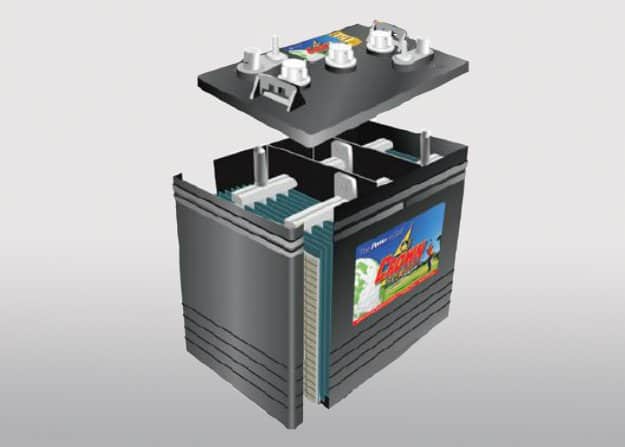
Electric carts use a DC or AC motor powered by a battery pack — typically 36V or 48V, with some performance builds running 72V. The motor itself rarely fails. What fails is everything around it: batteries that can’t hold charge, controllers that limit output, solenoids that stick. If your electric cart feels weak, the motor is usually the last thing to blame.
The practical difference comes down to use case. Electric carts are quieter, cheaper to run per mile, and need almost no routine maintenance beyond the battery pack. Gas carts run longer between refuels, handle heavy loads and steep hills with more torque headroom, and don’t leave you stranded if you forget to charge. For a flat neighborhood or golf course, electric is hard to beat. For hauling gear across hilly property, gas earns its keep.
How Long a Golf Cart Engine Lasts
A well-maintained gas engine will run 3,000 to 5,000 hours before needing a rebuild. At typical recreational use (say, an hour a day), that’s a decade or more. Electric motors last even longer — the motor itself can outlive the cart frame. What wears out in electric carts is the battery pack, usually at 4 to 8 years depending on chemistry, how deeply you cycle it, and whether you let it sit discharged.
If you’re buying a used cart, ask for service records. A gas cart with 2,000 hours and documented oil changes is a better buy than one with 800 hours and no history. Check for compression with a $20 gauge before you hand over money — anything below 90 PSI on a standard golf cart engine is a rebuild candidate.
Common Problems and How to Diagnose Them
Gas cart won’t start: Work through it in order. Fuel in the tank (obvious, but check it). Choke position. Spark — pull the plug, ground it against the block, crank it and look for spark. Compression — if the engine turns over fine but won’t fire, a compression test tells you if the rings or valves are the problem. Carburetor last — a gummed-up carb from sitting is the most common cause of a cart that ran fine last fall and won’t start this spring.
Gas cart backfires or runs rough: Usually carburetor or ignition timing. On older E-Z-GO and Yamaha carts, the points-style ignition systems drift over time. Replacement with a solid-state ignition module is a cheap fix that eliminates the problem permanently.
Electric cart is slow or loses power mid-ride: Check battery voltage under load, not just resting voltage. A pack that reads 48V at rest and drops to 38V when you put your foot down has bad cells. Test each battery individually. If one is low, the whole pack is compromised. Also check the solenoid — a clicking solenoid that doesn’t engage fully causes exactly this symptom.
Electric cart won’t move at all: Solenoid, controller, or throttle sensor in roughly that order of likelihood. A multimeter tells you whether the solenoid is getting signal. If it is and the cart still won’t move, the controller is the next suspect.
Routine Maintenance by Engine Type
Gas engines: Oil change every 125 hours or once a season, whichever comes first. Air filter inspection every 50 hours — more often if you’re driving on dusty trails. Spark plug replacement annually or when you see fouling. Fuel filter replacement every other season. Valve clearance check every 300 hours on overhead-valve engines (Club Car Subaru units need this more than the Robin/Subaru units in E-Z-GO). Belt inspection every season — a cracked or glazed belt slips under load and mimics engine problems.
Electric motors: Brush inspection every 500 hours on DC motors (AC motors are brushless and need nothing). Keep the motor housing clear of debris — a clogged vent causes heat buildup that kills the windings. Check all cable connections annually for corrosion and tightness. Battery maintenance is its own topic, but the short version: keep them charged, keep the water levels up on flooded cells, and don’t store them discharged.
Upgrade Options by Make and Model
The most common gas engine upgrade is the Predator 420cc swap. It fits E-Z-GO TXT models with a bolt-kit adapter and makes a noticeable difference in hill climbing and top speed. The Honda GX390 is the cleaner alternative — quieter, better fuel economy, longer-lived, and more expensive. For Club Car DS carts, both engines fit with appropriate adapters.
For electric carts, the two most impactful upgrades are the controller and the battery chemistry. A Navitas AC controller conversion on a Club Car Precedent or E-Z-GO RXV adds regenerative braking, smoother throttle response, and better hill performance. A lithium battery swap reduces weight by 150 to 200 pounds on a typical 48V pack, which alone makes the cart noticeably quicker.
| Make | Model | Stock Engine | Common Upgrades |
|---|---|---|---|
| E-Z-GO | TXT | 295cc Robin/Subaru | Predator 420cc, Honda GX390 |
| E-Z-GO | RXV | 48V AC motor | Navitas controller, lithium battery |
| Club Car | DS | Subaru EX40 | Honda GX390, 420cc clones |
| Club Car | Precedent | 48V IQ system | Navitas AC conversion, lithium battery |
| Yamaha | G16/G22 | 357cc Yamaha | Big block kits, 440cc engines |
| Yamaha | Drive2 | 48V AC motor | Lithium battery, Navitas controller |
Engine Swaps and Rebuilds
A full engine swap is a weekend project for someone comfortable with basic mechanics. Drain the old engine, disconnect the throttle cable and fuel line, unbolt the engine mount, pull it, and reverse the process with the new unit. The belt drive coupling is usually the fiddly part — get the belt tension right or you’ll burn through belts faster than you should.
Rebuild kits are worth considering when the engine is otherwise sound but needs rings, gaskets, or a valve job. The cost is usually $100 to $200 in parts versus $400 to $800 for a replacement engine. Common kits by model:
- E-Z-GO TXT (295cc/350cc Robin): Kits include pistons, rings, gaskets, seals, valves, and bearings. Example kit on Amazon.
- Club Car DS (Subaru EX40/KF82): Piston sets, camshafts, and full gasket kits are widely available. Match the kit to your specific engine code — EX40 and KF82 are not the same.
- Yamaha G-Series (G1 through G22): Top-end rebuild kits covering cylinder head, rings, and gaskets. Example kit on Amazon.
- Yamaha Drive2: Crankshaft seals, filters, and spark plugs for the standard gas engine. EFI variants need EFI-specific kits.
Always verify the engine code on your specific cart before ordering a rebuild kit. Yamaha alone has used a half-dozen different engine variants across the G-series, and the wrong gasket set won’t seal correctly.
Frequently Asked Questions
Can you put a motorcycle engine in a golf cart?
Yes, but it’s a custom fabrication project, not a bolt-in swap. Motorcycle engines are designed for very different power curves and mounting configurations. You’ll need custom motor mounts, a modified drivetrain coupling, upgraded brakes, and probably suspension work to handle the extra speed safely. People do it — there are YouTube builds showing the whole process — but go in with realistic expectations about time and cost.
How much horsepower does a stock golf cart engine have?
Most stock gas carts make 10 to 13 horsepower. That’s enough for flat ground and moderate grades at 15 to 19 mph. Electric motors don’t rate well in horsepower terms — they’re rated in kilowatts — but most 48V AC motors produce equivalent pulling power in the 5 to 7 kW range, which feels comparable to a 10 HP gas engine because of the instant torque delivery. Performance upgrades on either type can push well past those numbers.
Which is better for hills, gas or electric?
A properly upgraded electric cart with a good controller and fresh batteries handles hills well. But a stock electric cart on an aging pack will struggle on grades that a stock gas cart handles without complaint. Gas has more consistent torque when the going gets steep because it doesn’t depend on battery state of charge. If you’re regularly climbing 15%+ grades with a heavy load, gas or a lithium-converted electric with a high-torque controller is the better choice.
How do I know if my golf cart engine needs a rebuild?
For gas engines: compression below 90 PSI, excessive oil consumption, blue smoke on startup, or a knock that doesn’t go away after warm-up. A compression test is a 10-minute job and tells you more than any other single check. For electric motors: unusual heat, burning smell, or significantly reduced torque are signs the windings may be going. Electric motors rarely need rebuilding — when they fail, replacement is usually the smarter call.
Is a Predator 420cc a direct bolt-in for E-Z-GO?
Not exactly bolt-in, but close with the right adapter kit. You’ll need a Predator-to-E-Z-GO adapter plate, which runs $60 to $100, and the belt drive coupling needs to be matched to the new engine’s output shaft. The throttle cable and choke linkage also need minor adjustment. With the adapter kit in hand, an experienced DIYer can do the swap in four to six hours. The result is a noticeable improvement in hill performance and top speed over the stock 295cc engine.
About the Author
Chuck Wilson moved to a golf cart community in Arkansas and started working on carts the way most people in that situation do — out of necessity, then out of genuine interest. He has a background in CAD drafting and manufacturing, which means he tends to approach cart problems systematically and document what he finds. A lot of the information on this site came from hours of searching that turned up either nothing or wrong answers, so he started writing it down correctly.
Every article on GolfCartTips reflects hands-on experience with real hardware. If something has changed or a spec doesn’t match your cart, reach out and he’ll look into it.